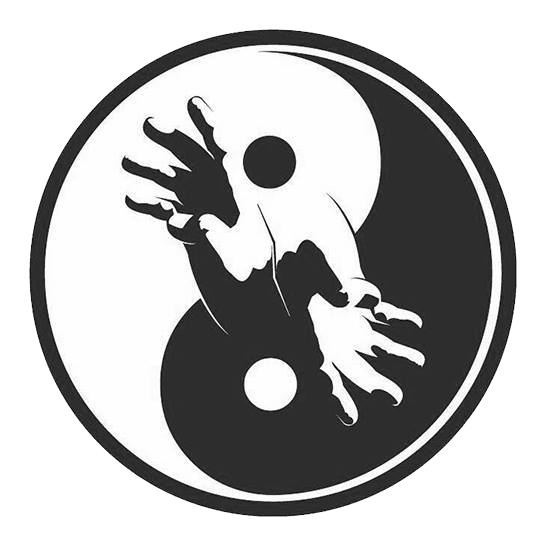
Le Vĩnh Xuân est un art martial qui vise à nourrir la spontanéité des gestes et des interactions. Axé sur le relâchement, la coordination et la connexion globale du corps-esprit, le Vĩnh Xuân est une méthode qui permet d’améliorer la perception sensorielle et intuitive, l’équilibre général, l’enracinement et la puissance. La pratique amène in fine une appréhension fine et une maîtrise intime de sa propre activité en interaction avec ce qui nous entoure.
Biography of our lineage
Fok Bo-Chuen (Huo Baoquan)
Fok Bo-Chuen (Huo Baoquan), said to have been known by the nickname Seung Do Fok (Shuang Dao Huo, Double Knife Fok) due to his skill with the weapons, was a Foshan student of Red Junk Opera performers Wong Wah-Bo and Dai Fa Min Kam.
In alternate accounts, Kok Bo-Chuen (Hao Baoquan) was said to have learned from Opera performer Law Man-Gung. In a variation from the Yiu Choi Wing Chun branch, this occured in Jinjiao, Guangxi.
During the end of the Qing dynasty, Fok Bo-Chuen worked as an Imperial constable in Foshan and gained a great reputation for his profound Wing Chun skills and great depth of martial arts knowledge.
During the early years of the 1900s, he was engaged to teach Wing Chun Kuen to Yuen Chai-Wan and Yuen Kay-San by their wealthy merchant father.

Yuen Chai-Wan (Nguyễn Tế Công)
( 1877 – 1959 )
Yuen Chai-Wan (Nguyễn Tế Công) was the forth son of a Foshan Fireworks merchant and was thus also known as Yuen Lo Sei (Yuen the Forth). Due to a childhood illness, he was also referred to as Dao Pei Chai (Pock Skin Chai).
Yuen first learned Wing Chun Kuen under Fok Bo-Chuen and later continued his studies with Fung Siu-Ching. In Foshan, Yuen Chai-Wan taught students such as Yiu Choi.
In 1936 he was invited to teach Wing Chun in Vietnam, at the Nanhai and Shunde Expatriates Associations and moved to Hanoi, where he was known by the Vietnamese pronounciation of his name, Nguyen Te-Cong, and founded his first school. In 1955 he relocated to Saigon where he established a second school.
Among his students in Vietnam were Nguyen Duy-Hai, Ngo Si-Quy, Luk VinhKhai, and others.
Yuen Chai-Wan passed away in 1959 at the age of 82.

Ngô Sỹ Quý
( 1922 – 1997 )
Ngô Sỹ Quý was born in 1922 in a wealthy family in the Dong Kinh Nghia Thuc street (nowadays this is Ma May, Hang Bac, Phat Loc streets).
Since childhood he was interesting in music and martial art. He learnt violin from a priest of the church. At one occasion of church concert for the association of Chinese ethnic, the priest introduced him to Cam Túc Cường, Cường was a son of a Chinese family where Tế Công served as a housekeeper. He admired Quý’s violin skill very much and made a close friendship with Quý, learnt violin from him.
Afterwards Cường introduced Quý to Tế Công, so that he was able to become a student of Te Cong in 1938. Quý began to teach vĩnh xuân in 1969 with a specific approach based on internal martial arts principles, focused on natural activity and movement principles which allow to reach spontaneity and freedom in actions, movement, body, interaction and mind.
An array of resources
Our comprehensive suite of professional services caters to a diverse clientele, ranging from homeowners to commercial developers.
Études Architect App
- Collaborate with fellow architects.
- Showcase your projects.
- Experience the world of architecture.

Études Newsletter
- A world of thought-provoking articles.
- Case studies that celebrate architecture.
- Exclusive access to design insights.
“Études has saved us thousands of hours of work and has unlocked insights we never thought possible.”
Annie Steiner
CEO, Greenprint
Watch, Read, Listen
-
—
par
Join 900+ subscribers
Stay in the loop with everything you need to know.